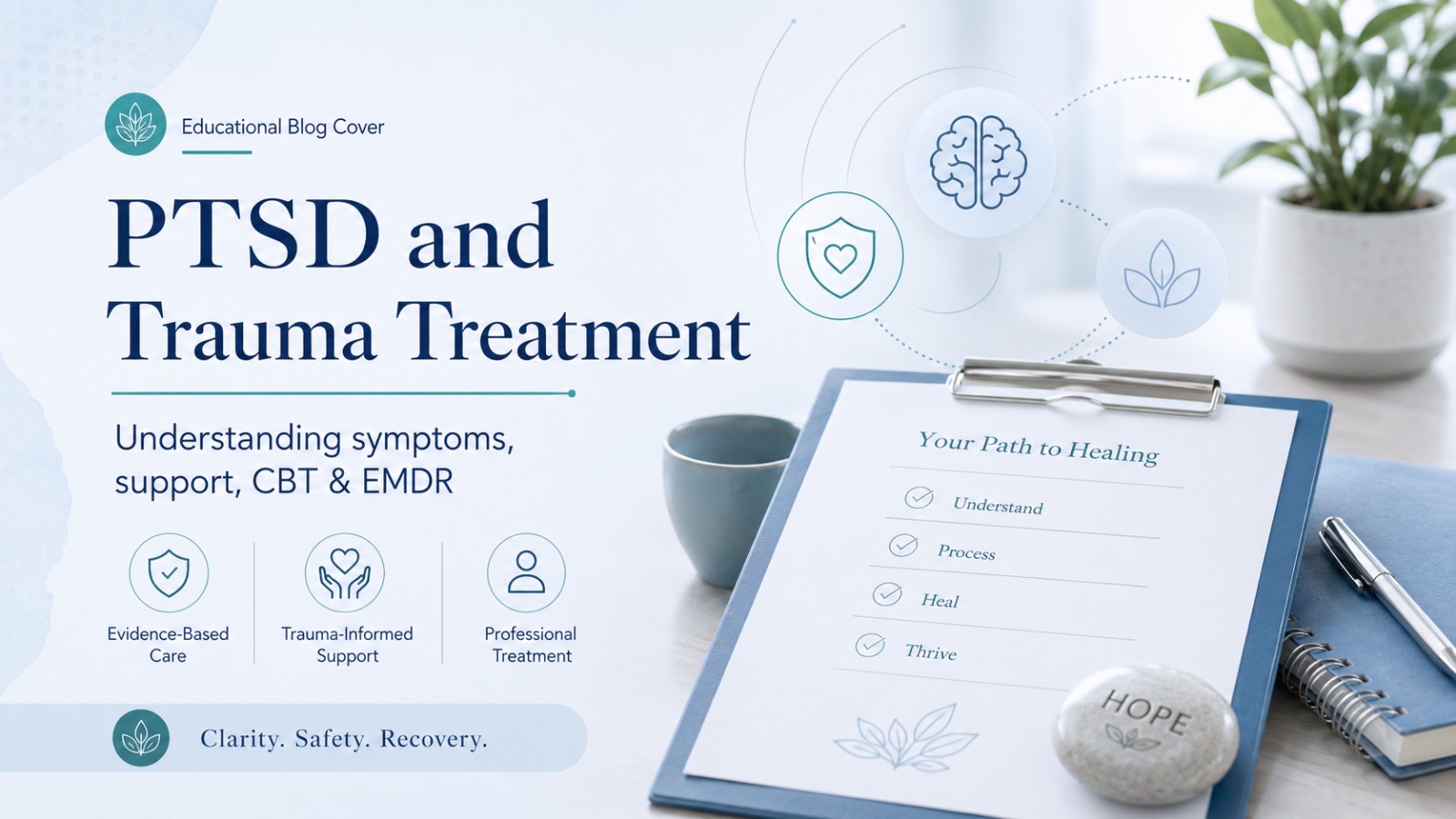
Post-traumatic stress disorder, often called PTSD, can develop after someone experiences or witnesses a traumatic event. It is not a sign of weakness, and it is not simply “being unable to move on”. PTSD is a recognised mental health condition that can affect how a person feels, thinks, sleeps, relates to others and responds to reminders of what happened.
The NHS describes PTSD as an anxiety disorder caused by very stressful, frightening or distressing events. Symptoms may include flashbacks, nightmares, avoidance, feeling on edge, sleep problems, irritability, guilt, emotional numbness and difficulties with concentration.
For many people, symptoms improve with time and support. For others, PTSD can persist and interfere with daily life. Evidence-based psychological therapies, particularly trauma-focused cognitive behavioural therapy and eye movement desensitisation and reprocessing, are recommended by NICE and are also recognised by the NHS and the Royal College of Psychiatrists.
What PTSD can feel like
PTSD can affect people in different ways. Some people repeatedly re-experience the trauma through intrusive memories, nightmares or flashbacks. Others avoid places, conversations, people or activities that remind them of what happened. Many people feel constantly alert, unsafe, tense or easily startled.
PTSD can also affect mood and relationships. A person may feel detached, ashamed, angry, low, anxious or emotionally numb. They may struggle to trust others, feel overwhelmed by reminders, or find it difficult to explain what is happening to them.
These reactions are not personal failures. They are trauma responses. The aim of treatment is not to force someone to “forget” what happened, but to help the brain and body process traumatic memories in a safer, less distressing way.
When PTSD symptoms may need professional support
It is common to feel distressed after a traumatic experience. NICE recognises that active monitoring may be appropriate for some people with mild symptoms within the first month after trauma. However, where symptoms persist or cause significant distress or impairment, professional assessment and treatment may be needed.
A person may benefit from seeking help if trauma-related symptoms are affecting sleep, work, study, relationships, parenting, physical wellbeing, concentration, emotional regulation or daily functioning.
The NHS advises speaking to a GP if PTSD symptoms are interfering with everyday life, especially if symptoms remain distressing several weeks after the traumatic event. Treatment may include trauma-focused CBT, EMDR and, in some cases, medication such as antidepressants.
What NICE recommends for PTSD
NICE guideline NG116 covers the recognition, assessment and treatment of PTSD in children, young people and adults. It aims to improve quality of life by reducing symptoms such as anxiety, sleep problems and concentration difficulties. The guideline was originally published in 2018 and was reviewed in April 2025.
For adults with PTSD, NICE recommends trauma-focused psychological therapies as first-line treatment. These include trauma-focused CBT and EMDR, depending on the timing, presentation and individual needs of the person. NICE also highlights the importance of coordinated care, access to treatment, cultural and language considerations, and support for people with complex needs.
This matters because PTSD treatment should be structured, clinically appropriate and delivered by trained professionals. Trauma therapy should not feel rushed, unsafe or dismissive. It should involve preparation, consent, pacing and a shared understanding of the treatment plan.
What is trauma-focused CBT?
Trauma-focused cognitive behavioural therapy, sometimes shortened to TF-CBT, is a structured psychological therapy designed to help people process traumatic experiences and reduce PTSD symptoms.
It may involve understanding trauma responses, learning grounding and coping strategies, gradually working with traumatic memories, identifying unhelpful beliefs linked to the trauma, and rebuilding confidence in everyday life. The exact approach should be tailored to the person’s age, needs, circumstances and readiness.
The NHS lists trauma-focused CBT as one of the main psychological treatments for PTSD. NICE also recommends trauma-focused CBT for PTSD, including adaptations for children and young people where appropriate.
Trauma-focused CBT is not the same as simply “talking about the past”. It is a careful therapeutic process that helps people make sense of what happened and reduce the power of traumatic memories and triggers.
What is EMDR?
Eye movement desensitisation and reprocessing, known as EMDR, is another evidence-based psychological therapy used for PTSD. During EMDR, the person is supported to recall aspects of a traumatic memory while engaging in bilateral stimulation, often through guided eye movements, sounds or taps. The aim is to help the brain reprocess the memory so that it becomes less distressing and less intrusive.
The NHS describes EMDR as a treatment where eye movements are used to help process traumatic memories. The Royal College of Psychiatrists also states that the strongest evidence for treating PTSD is currently for trauma-focused CBT and EMDR.
EMDR should be delivered by a properly trained therapist. It is not simply an eye movement technique; it is a structured therapy that requires clinical judgement, preparation and appropriate aftercare.
What does the research evidence say?
The evidence base for PTSD treatment consistently supports trauma-focused psychological therapies.
A Cochrane review on psychological therapies for chronic PTSD in adults found that individual trauma-focused CBT and EMDR performed better than waitlist or usual care in reducing clinician-assessed PTSD symptoms. The review also noted limitations in the quality of some evidence, which is an important reminder that treatment should be personalised and clinically monitored.
A 2025 overview of meta-analyses on psychological interventions for adult PTSD reported evidence supporting the long-term efficacy of trauma-focused CBT and EMDR, while finding less evidence for long-term benefits of other interventions.
Research and guidance therefore point in the same general direction: for PTSD, the best-supported psychological treatments are trauma-focused therapies, especially trauma-focused CBT and EMDR.
Is medication used for PTSD?
Medication can sometimes be helpful for PTSD, particularly where symptoms are severe, persistent, or occur alongside depression, anxiety or sleep difficulties. However, medication is not usually presented as the only option.
The NHS lists medicines, usually antidepressants, as one possible treatment for PTSD, alongside trauma-focused CBT and EMDR. NICE provides specific recommendations on drug treatment, including when medication may be considered and the importance of reviewing benefits and side effects.
Any decision about medication should be made with a qualified clinician, based on the person’s symptoms, preferences, medical history, risks, benefits and wider treatment plan.
What about complex PTSD?
Some people experience more complex and long-standing trauma responses, especially after repeated, prolonged or interpersonal trauma. They may have PTSD symptoms alongside difficulties with emotional regulation, self-worth, relationships, dissociation, depression, anxiety, substance misuse or self-harm.
NICE includes recommendations for people with PTSD and complex needs, including the importance of coordinated care and addressing coexisting difficulties.
For complex PTSD, therapy may need to be paced carefully. Some people may need stabilisation, emotional regulation work, risk management or support with daily functioning before deeper trauma processing begins. This does not mean recovery is impossible. It means treatment should be thoughtful, phased and person-centred.
What good trauma care should look like
Good trauma care should be safe, respectful and collaborative. A person should understand what therapy involves, why it is being recommended, what alternatives exist, and what to do if distress increases between sessions.
This is also consistent with CQC fundamental standards, which emphasise person-centred care, dignity and respect, consent, safety and safeguarding from abuse.
A trauma-informed approach should avoid blame, pressure or judgement. It should recognise that people respond to trauma differently and that recovery is not always linear.
When to seek urgent help
PTSD can sometimes be associated with overwhelming distress, self-harm, suicidal thoughts, substance misuse or feeling unable to stay safe. If someone needs urgent mental health support in England, NHS guidance advises contacting 111 online or calling 111 and selecting the mental health option. If there is immediate danger or a risk to life, emergency services should be contacted.
Samaritans can also be contacted on 116 123 for urgent emotional support.
How Oxford Psychiatry Group can help
Oxford Psychiatry Group provides specialist psychiatric and psychological services, including adult psychiatry, anxiety and stress support, depression care, talking therapies, CBT and EMDR. The service states that its care is safe, effective, confidential, person-centred and grounded in evidence-based practice.
For someone experiencing trauma-related symptoms, a professional assessment can help clarify whether PTSD, complex PTSD, anxiety, depression or another difficulty may be present. It can also help identify the most suitable support, whether that involves trauma-focused therapy, EMDR, psychiatric review, medication review, wellbeing support or coordinated care.
The aim is not to force someone to revisit painful memories before they are ready. The aim is to provide careful, compassionate and evidence-based support that helps the person move towards safety, stability and recovery.
Final thoughts
PTSD is treatable, and effective help is available. Trauma-focused CBT and EMDR are not quick fixes, and they are not suitable in exactly the same way for every person. But they are among the best-supported psychological treatments for PTSD and are recommended in UK guidance.
If trauma symptoms are affecting your sleep, relationships, work, mood, concentration or sense of safety, it may be worth seeking a professional assessment. With the right support, many people can reduce the impact of trauma and begin to feel more in control of their lives again