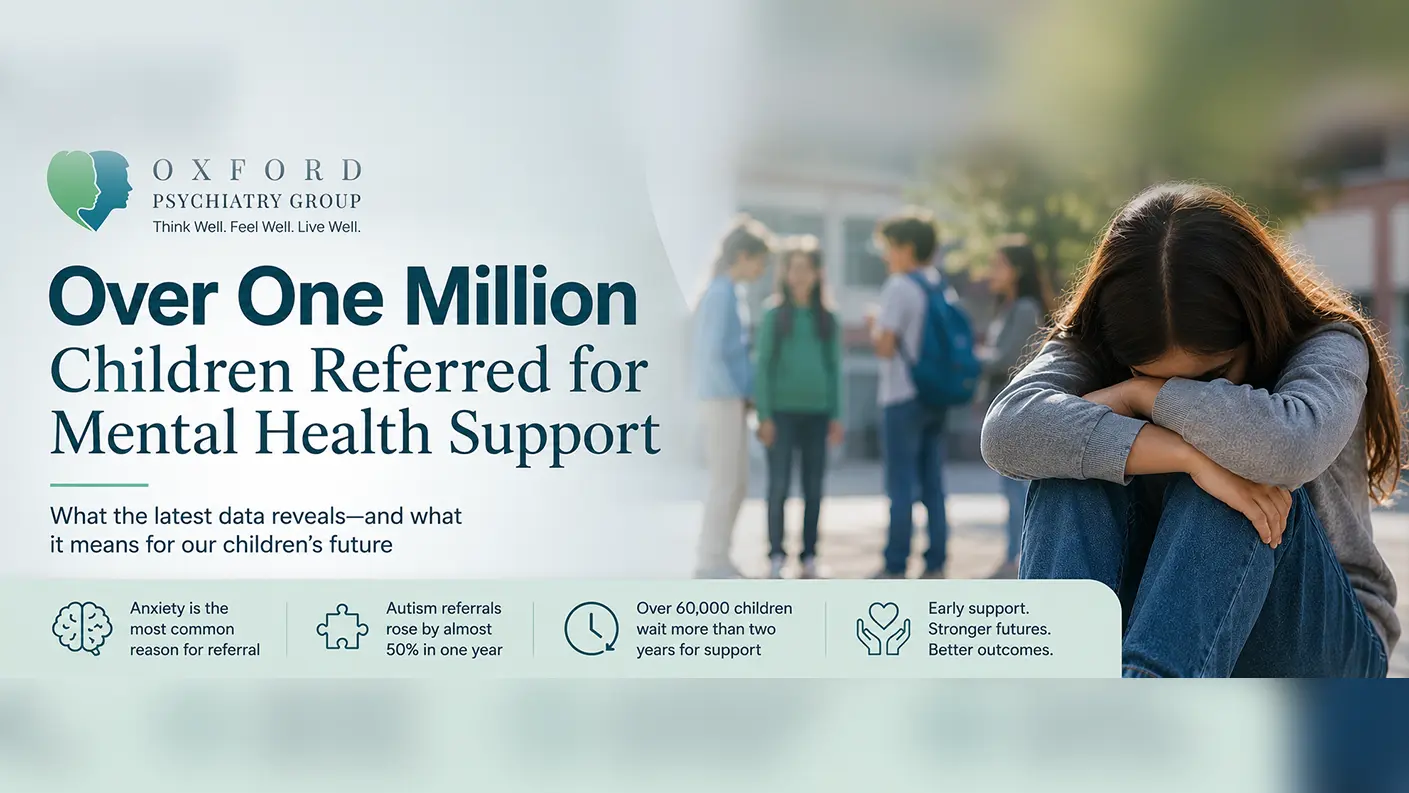
Recent reports show that more than one million children in England were referred to mental health services during 2024–25. That’s approximately one in every ten children seeking specialist support in just one year.
While the number itself is striking, the bigger question is:
What is driving this increase, and what should we be doing differently?
A Growing Need That Can No Longer Be Ignored
Mental health professionals have witnessed increasing demand for many years, but recent figures suggest that services are struggling to keep pace.
Anxiety remains the most common reason for referral, while referrals relating to autism, ADHD and other neurodevelopmental conditions have risen significantly.
This does not necessarily mean that these conditions are becoming dramatically more common.
In many cases, it reflects something else:
- Greater public awareness
- Improved recognition by schools and families
- Increased willingness to seek help
- Better understanding that mental health deserves the same attention as physical health
These developments are positive.
The challenge is ensuring services have the capacity to respond.
Early Support Changes Lives
Children rarely wake up one day with severe anxiety or emotional distress.
Symptoms often develop gradually.
A child who begins avoiding school, withdrawing from friends, becoming increasingly anxious or struggling to regulate emotions is communicating that something is wrong.
The earlier these concerns are recognised, the greater the opportunity to provide meaningful support before difficulties become more complex.
Unfortunately, lengthy waiting lists often mean many families spend months—or even years—searching for answers.
For a developing child, that is a significant period of time.
Neurodevelopmental Assessments Are Increasing for a Reason
One of the most notable findings is the rise in referrals relating to autism and ADHD.
Many children are not simply “misbehaving” or “not paying attention.”
Some may be experiencing genuine neurodevelopmental differences that affect:
- Attention
- Emotional regulation
- Learning
- Social communication
- Executive functioning
- Behaviour at home and school
A thorough assessment can help families understand what is happening and identify appropriate support rather than relying on assumptions or labels.
Mental Health Is About More Than Diagnosis
Assessment is only the beginning.
Children benefit most when healthcare professionals, schools and families work together to create consistent support.
This may include:
- Psychological therapies
- Educational adjustments
- Parenting support
- Behavioural strategies
- Medication where clinically appropriate
- Ongoing monitoring as children grow and develop
Every child is different, and support should always reflect their individual needs rather than adopting a one-size-fits-all approach.
Waiting Until Crisis Should Never Be the Standard
One of the most concerning findings within the report is that many children only receive specialist input after reaching crisis point.
Mental healthcare should be preventative—not reactive.
The earlier concerns are explored, the greater the opportunity to improve long-term outcomes, reduce distress and help children thrive both academically and socially.
No family should feel they must wait until difficulties become overwhelming before seeking professional advice.
Looking Ahead
The growing number of referrals is not simply a statistic.
It reflects thousands of children, parents and families looking for understanding, reassurance and support.
As awareness continues to improve, investment in timely, accessible mental healthcare must keep pace.
Every child deserves the opportunity to be heard, understood and supported before challenges become lifelong difficulties.
At Oxford Psychiatry Group, we believe that early assessment, evidence-based care and compassionate support can make a meaningful difference to children, young people and their families.
Because behind every referral is a child who deserves the chance to reach their full potential.