
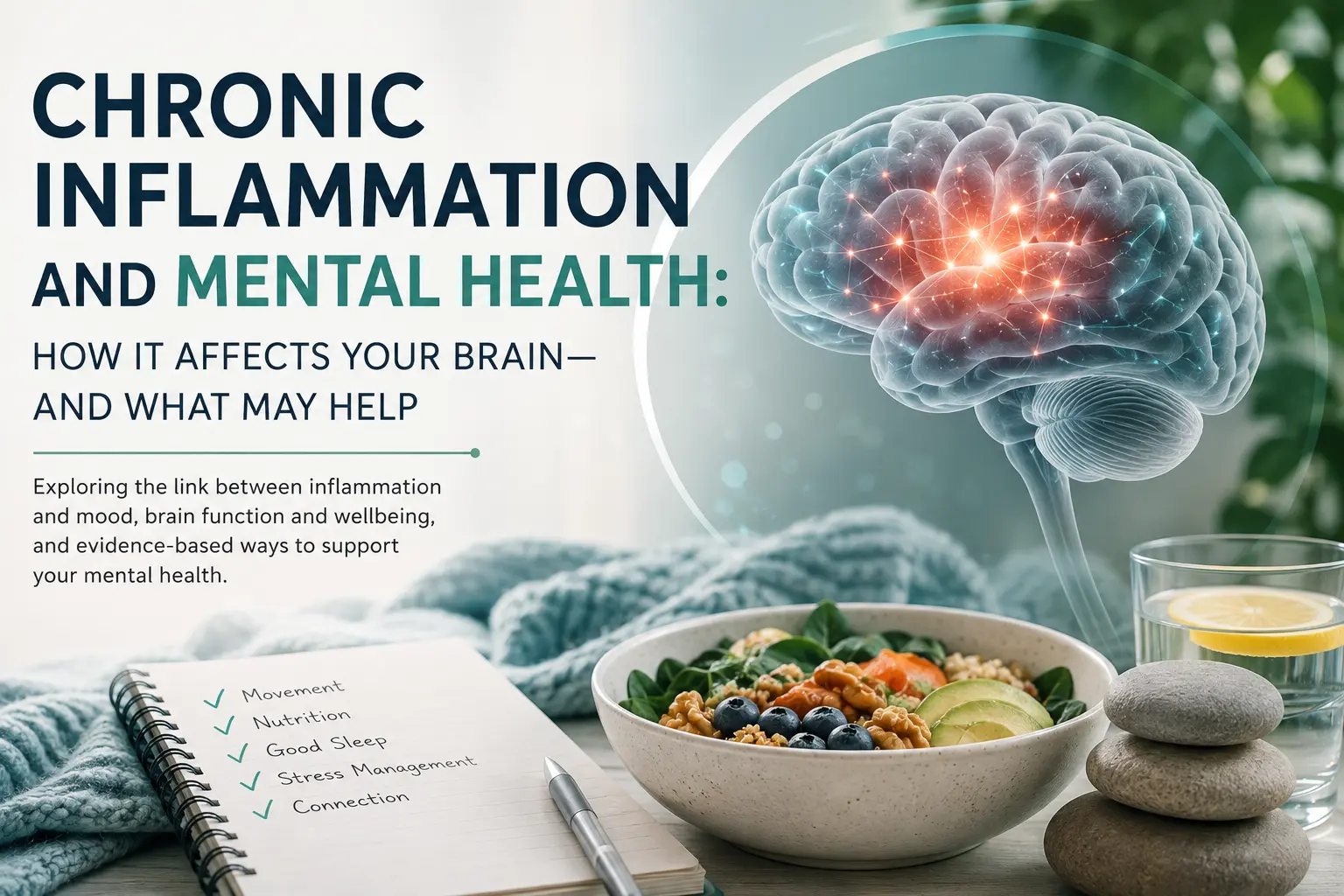
Inflammation is usually something we associate with physical illness: a swollen joint, an infected wound or a fever when the body is fighting an infection.
But inflammation is also increasingly being studied in psychiatry.
Over the past two decades, researchers have found evidence that persistent inflammatory activity may be associated with changes in mood, motivation, sleep, energy and cognitive functioning in some people.
This has led to growing interest in the relationship between the immune system and mental health.
However, the science needs to be interpreted carefully.
Inflammation is not a single explanation for depression, anxiety, fatigue or “brain fog”. Mental health conditions develop through complex interactions between biological, psychological and social factors, including genetics, physical health, stress, sleep, relationships, trauma, medication and life circumstances.
Instead, inflammation appears to be one biological pathway that may be relevant for some people.
So, what exactly is chronic inflammation, how might it affect the brain, and what does the current evidence suggest we can do about it?
What is inflammation?
Inflammation is part of the body’s normal immune response.
When the immune system detects infection, injury or tissue damage, it releases chemical signals that help the body respond to the problem and begin the healing process.
This short-term response is known as acute inflammation.
Acute inflammation is essential. Without it, the body would struggle to fight infections or repair damaged tissue.
The situation becomes more complicated when inflammatory activity remains elevated for a prolonged period.
This is sometimes described as chronic inflammation or chronic low-grade inflammation.
It may occur alongside conditions including:
- autoimmune and inflammatory diseases
- some persistent infections
- obesity and metabolic disorders
- cardiovascular disease
- diabetes
- chronic sleep disturbance.
Lifestyle and environmental factors may also influence inflammatory activity, including:
- smoking
- physical inactivity
- disrupted sleep
- prolonged psychological stress
- excessive alcohol consumption
- some dietary patterns.
Importantly, chronic inflammation may exist without the obvious redness, swelling or pain associated with an acute injury.
How is inflammation measured?
Researchers commonly study inflammatory activity by measuring substances in the blood.
These include:
- C-reactive protein (CRP)
- interleukin-6 (IL-6)
- tumour necrosis factor-alpha (TNF-α)
- interleukin-1 beta (IL-1β).
These are sometimes described as inflammatory biomarkers.
However, an important distinction needs to be made.
These are not psychiatric diagnostic tests.
A raised CRP level, for example, does not mean someone has depression or another mental health condition.
CRP can rise because of infection, autoimmune disease, obesity, tissue injury and many other medical causes.
Blood tests therefore need to be interpreted within the wider clinical picture.
How can inflammation affect the brain?
The immune system and the brain are not separate systems.
They communicate continuously.
Signals produced by the immune system can influence the brain through several routes, including:
- the bloodstream
- the vagus nerve
- immune signalling molecules
- changes in blood-brain barrier activity
- interactions with immune cells within the nervous system.
One particularly important group of cells is known as microglia.
Microglia are immune cells located within the central nervous system. Under normal circumstances, they contribute to brain maintenance, protection and responses to injury.
Researchers are investigating how persistent or poorly regulated inflammatory signalling may affect several brain processes.
These include:
- neurotransmitter activity
- communication between nerve cells
- synaptic plasticity
- the body’s stress-response system
- reward and motivation pathways
- sleep regulation
- energy regulation.
Inflammatory signalling may also affect pathways involving serotonin, dopamine and glutamate.
Another area of research involves the kynurenine pathway, which affects how the amino acid tryptophan is metabolised.
These biological mechanisms may help explain why inflammation is sometimes associated with symptoms such as:
- fatigue
- reduced motivation
- slowed thinking
- disturbed sleep
- reduced pleasure or interest.
However, these mechanisms remain an active area of scientific research.
Finding an association between inflammation and a symptom does not automatically prove that inflammation caused the symptom.
Is inflammation linked to depression?
There is now considerable evidence of an association between inflammation and depression.
Meta-analyses have found that, on average, people with major depressive disorder may have higher levels of certain inflammatory markers, particularly CRP and IL-6, compared with people without depression.
However, averages across large groups can hide important differences between individuals.
Not everyone with depression has increased inflammatory markers.
And not everyone with increased inflammatory activity develops depression.
This matters because depression is not a single biologically identical condition.
For one person, depression may occur following bereavement or trauma.
For another, contributing factors may include:
- genetic vulnerability
- chronic pain
- social isolation
- disrupted sleep
- hormonal illness
- physical disease
- prolonged stress
- medication
- substance use.
Some people with depression may also show evidence of increased inflammatory activity.
Others may not.
Are particular depressive symptoms more closely associated with inflammation?
Research suggests that inflammation may be more strongly associated with certain symptoms than others.
These can include:
- fatigue
- reduced energy
- loss of pleasure
- changes in appetite
- disturbed or excessive sleep
- slowed thinking
- reduced motivation.
These are sometimes described as neurovegetative symptoms.
This has led researchers to investigate whether there may be subgroups of depression in which inflammation plays a larger biological role.
You may sometimes see the term “inflammatory depression” used in research discussions.
However, this is important:
“Inflammatory depression” is not currently a standard clinical diagnosis used routinely in NHS or NICE-guided psychiatric practice.
There is currently no single blood test that can determine whether someone’s depression is “caused by inflammation”.
Can inflammation cause depression?
The relationship appears to be more complicated than a simple cause-and-effect pathway.
There is evidence that activating the immune system can influence mood.
For example, some people receiving treatments that deliberately stimulate inflammatory immune responses have developed depressive symptoms.
Experimental studies have also shown that temporary inflammatory activation can affect mood, motivation and emotional processing.
Longitudinal research provides further evidence that higher levels of markers such as CRP and IL-6 may predict subsequent depressive symptoms in some populations.
However, the relationship can also operate in the opposite direction.
Depression may contribute indirectly to increased inflammatory activity through factors such as:
- sleep disruption
- reduced physical activity
- smoking
- increased alcohol consumption
- metabolic changes
- changes in stress hormones.
Inflammation and depression also share several risk factors, including chronic illness, obesity, adversity and long-term stress.
The most accurate interpretation is therefore that the relationship may be bidirectional and highly individual.
What about anxiety and chronic stress?
Chronic psychological stress can affect several systems involved in immune regulation.
These include the:
- hypothalamic-pituitary-adrenal axis
- sympathetic nervous system
- immune system.
During short-term stress, hormones such as cortisol help coordinate the body’s response and regulate inflammation.
With prolonged stress, however, these systems may become dysregulated.
Researchers have proposed that this may contribute to increased low-grade inflammatory activity in some people.
Inflammation has also been investigated in:
- anxiety disorders
- post-traumatic stress disorder
- chronic stress
- stress-related cognitive difficulties.
However, the evidence is generally less consistent than it is for depression.
It would therefore be inaccurate to describe anxiety simply as an inflammatory condition.
Anxiety has many possible biological, psychological and social contributors.
Can chronic inflammation contribute to “brain fog”?
Possibly.
“Brain fog” is not a formal medical diagnosis. It is an everyday term people use to describe problems such as:
- difficulty concentrating
- forgetfulness
- slowed thinking
- reduced mental stamina
- difficulty finding words
- feeling mentally unclear.
People living with some chronic inflammatory or immune-related illnesses frequently report these kinds of symptoms.
Examples may include:
- autoimmune disease
- inflammatory bowel disease
- rheumatoid arthritis
- post-viral illnesses
- long COVID.
Researchers are investigating how systemic inflammation may influence brain regions and networks involved in memory, attention and executive functioning.
Studies in older adults have also found associations between some systemic inflammatory markers and poorer cognitive performance.
However, “brain fog” has many other potential causes.
These include:
- poor sleep
- depression
- anxiety
- medication side effects
- anaemia
- thyroid disorders
- vitamin deficiencies
- hormonal changes
- chronic pain
- ADHD
- infection
- post-viral illness
- neurological conditions.
Persistent or worsening cognitive symptoms should therefore be assessed properly rather than automatically attributed to inflammation.
Is inflammation linked to dementia?
Inflammation is also being studied as part of the biology of ageing and neurodegenerative disease.
As people age, low-grade inflammatory activity tends to increase.
Researchers sometimes refer to this phenomenon as “inflammageing”.
Some longitudinal studies have found associations between systemic inflammatory markers and:
- cognitive decline
- cerebrovascular disease
- changes in brain structure
- dementia risk.
Inflammation may also interact with processes involved in Alzheimer’s disease, including:
- amyloid proteins
- tau proteins
- blood vessel health
- microglial activity.
However, inflammation is only one part of a highly complex process.
Dementia can result from several different diseases and involves interactions between:
- ageing
- genetics
- cardiovascular health
- neurological changes
- lifestyle factors
- environmental factors.
It would therefore be misleading to say that chronic inflammation alone causes dementia.
Routine inflammatory blood tests also cannot currently predict with certainty whether a person will develop dementia.
Memory or cognitive changes should receive an appropriate clinical assessment rather than relying on inflammatory markers alone.
Can anti-inflammatory medicines treat depression?
This is an active and potentially important area of psychiatric research.
Researchers have investigated a variety of anti-inflammatory treatments, including:
- some non-steroidal anti-inflammatory medicines
- celecoxib
- statins
- aspirin
- cytokine-targeting medicines
- other immune-modulating treatments.
Some systematic reviews and meta-analyses have reported improvements in depressive symptoms with certain anti-inflammatory strategies.
There is also growing interest in whether these treatments may work better in people who already show evidence of elevated inflammatory activity.
However, these findings should not be interpreted as meaning that anti-inflammatory medicines are established treatments for depression.
Current NICE guidance does not recommend anti-inflammatory medication as a routine treatment for depression.
These medicines can also cause significant adverse effects.
Depending on the treatment, risks may include:
- stomach ulcers or bleeding
- kidney problems
- cardiovascular complications
- interactions with other medicines
- changes to immune function.
People should therefore not start aspirin, ibuprofen, celecoxib or another anti-inflammatory drug to treat depression without medical advice.
At present, the research is more relevant to the future development of personalised psychiatry than to routine self-treatment.
Scientists are investigating whether biomarkers could eventually help clinicians identify groups of patients who are more likely to benefit from specific treatments.
That approach remains an evolving area of research.
Should you have a CRP test for depression?
It can be tempting to assume that testing inflammatory markers will provide an explanation for low mood, fatigue or brain fog.
At present, this is not how depression is routinely diagnosed.
Depression is diagnosed through a clinical assessment involving symptoms, their duration, severity, impact on everyday life and other relevant biological, psychological and social factors.
A clinician may arrange blood tests when there is a reason to investigate a physical condition that could contribute to symptoms.
Depending on the circumstances, this might include investigating:
- anaemia
- thyroid problems
- infection
- vitamin deficiencies
- inflammatory illness
- metabolic conditions.
But a CRP result cannot independently diagnose depression or identify its single cause.
Can reducing inflammation improve mental health?
This question requires another careful distinction.
Measures that support healthy inflammatory regulation often also support physical and mental health more generally.
That does not mean every benefit occurs because inflammation has been reduced.
The strongest practical advice therefore focuses on established health behaviours rather than attempting to “detox” inflammation.
1. Be physically active
Regular physical activity has well-established benefits for both physical and mental health.
Long-term exercise is also associated with reductions in several inflammatory markers in some populations.
Both aerobic and resistance-based activities may be beneficial.
Examples include:
- brisk walking
- cycling
- swimming
- resistance training
- dancing
- regular everyday movement.
Exercise does not have to be extreme to be worthwhile.
In fact, an intense exercise session can temporarily increase some inflammatory signals as part of the body’s normal response to physical stress.
The longer-term pattern of regular activity is more relevant to health.
For depression specifically, exercise is also recognised within NICE guidance as a treatment option in appropriate circumstances.
2. Follow a balanced Mediterranean-style dietary pattern
There is no single “anti-inflammatory food” that can reset the immune system.
Research instead supports looking at overall dietary patterns.
A Mediterranean-style diet typically includes:
- vegetables
- fruit
- beans and lentils
- whole grains
- nuts and seeds
- olive oil
- fish
- relatively limited amounts of highly processed foods.
Recent meta-analyses of randomised trials suggest Mediterranean dietary patterns can reduce some inflammatory biomarkers, including CRP and IL-6.
However, nutrition should not be presented as a cure for depression or another psychiatric condition.
Diet is one component of overall health.
3. Prioritise good-quality sleep
Sleep and immune function are closely connected.
Sleep disturbance has repeatedly been associated with changes in inflammatory activity.
Recent research in people with major depression has also found an association between subjective sleep problems and inflammatory markers, particularly CRP, although the effects are relatively small and studies remain heterogeneous.
Poor sleep can also independently affect:
- mood
- concentration
- memory
- appetite
- anxiety
- emotional regulation.
Persistent insomnia should therefore be taken seriously.
Conditions such as obstructive sleep apnoea should also be assessed and treated when suspected.
4. Stop smoking
Smoking promotes inflammatory activity and is a major risk factor for:
- cardiovascular disease
- respiratory disease
- stroke
- cancer.
Stopping smoking is therefore one of the most valuable changes someone can make for long-term health.
People who need help to stop can seek support through their GP, pharmacist or NHS stop smoking services.
5. Moderate alcohol consumption
Alcohol can affect:
- sleep
- liver health
- blood pressure
- mood
- anxiety
- medication
- metabolic health.
Heavy or dependent alcohol use can also contribute to both physical and mental health problems.
Reducing harmful alcohol consumption may therefore benefit overall wellbeing, even when the precise effect on an individual’s inflammatory markers is unknown.
6. Treat underlying physical health conditions
Inflammatory activity may sometimes be driven by an underlying medical problem.
Examples include:
- autoimmune disease
- infection
- diabetes
- untreated dental disease
- metabolic illness
- obesity-related health problems
- sleep apnoea.
Persistent symptoms should therefore not be managed with lifestyle advice alone when an underlying medical condition may be present.
Appropriate diagnosis and treatment matter.
7. Manage chronic psychological stress
Long-term stress can affect both physical and mental health.
Helpful approaches may include:
- psychological therapy
- regular exercise
- improving sleep
- relaxation techniques
- mindfulness-based approaches
- maintaining supportive social relationships
- addressing workplace or relationship stressors.
These interventions should not be sold as direct “inflammation treatments”.
Their value lies primarily in their established ability to support psychological wellbeing, coping, sleep and quality of life.
What about supplements for inflammation?
The supplement market frequently promotes products described as “anti-inflammatory”.
Common examples include:
- turmeric
- curcumin
- omega-3 fatty acids
- probiotics
- herbal preparations.
Some of these products have been studied, and certain supplements have shown potentially useful biological effects in particular populations.
However, the quality of evidence varies considerably.
Important questions include:
- which formulation was studied
- what dose was used
- how long treatment lasted
- whether the effect was clinically meaningful
- whether the commercial product matches the product used in research.
Supplements can also cause adverse effects and interact with prescription medication.
For example, some supplements may alter bleeding risk or interact with psychiatric and cardiovascular medicines.
“Natural” does not mean risk-free.
Speak to a doctor or pharmacist before taking supplements if you use prescription medication or have an existing medical condition.
Be cautious about commercial “inflammation tests”
Consumers are increasingly offered private tests that claim to identify:
- hidden inflammation
- biological stress
- personalised inflammation scores
- foods that supposedly cause inflammation
- supplement programmes based on blood markers.
Some inflammatory tests have legitimate medical uses.
However, interpretation matters.
A single abnormal inflammatory marker does not necessarily identify the cause, and testing without a clear clinical reason can result in unnecessary worry or further investigations.
Be cautious about services that use broad blood tests to make strong claims about mental health without appropriate clinical assessment.
When should you speak to a doctor or mental health professional?
Seek professional advice if you experience persistent or worsening:
- low mood
- loss of interest or pleasure
- anxiety
- fatigue
- concentration difficulties
- memory problems
- major changes in sleep
- unexplained physical symptoms
- difficulties managing everyday responsibilities.
These symptoms can have many possible explanations.
A proper assessment may consider:
- mental health
- medication
- sleep
- physical illness
- substance use
- stress
- nutrition
- neurological symptoms
- social circumstances.
The aim should be to understand the whole person, rather than assuming one biological explanation.
If you are experiencing thoughts of suicide or self-harm, or believe you may be at immediate risk, seek urgent help through NHS urgent mental health services, NHS 111 or emergency services as appropriate.
How Oxford Psychiatry Group can help
Mental and physical health frequently influence one another.
If persistent low mood, anxiety, fatigue, sleep difficulties or cognitive symptoms are affecting your everyday life, a comprehensive assessment can help identify the factors that may be contributing.
At Oxford Psychiatry Group, assessment is individualised and considers the person’s:
- symptoms
- physical health
- psychiatric history
- medication
- sleep
- lifestyle
- social circumstances
- personal goals.
Where appropriate, this can help guide evidence-based treatment and identify whether further physical health assessment should also be considered.
To discuss your symptoms or arrange an assessment, contact Oxford Psychiatry Group or book an initial consultation.
Frequently Asked Questions
Can inflammation cause depression?
Inflammation may contribute to depression in some people, but depression cannot usually be explained by inflammation alone.
Research suggests a complex and potentially bidirectional relationship involving immune function alongside genetic, psychological, social and lifestyle factors.
Does everyone with depression have high inflammation?
No.
Studies find higher average levels of some inflammatory markers in groups of people with depression, but there is substantial variation between individuals.
Many people with depression do not have evidence of elevated systemic inflammation.
Can a CRP blood test diagnose depression?
No.
CRP is an inflammatory marker, not a psychiatric diagnostic test.
A raised CRP can occur for many reasons, including infection, autoimmune disease, obesity and physical injury.
Depression requires an appropriate clinical assessment.
Can inflammation cause brain fog?
Inflammatory illness may contribute to cognitive symptoms in some people.
However, concentration and memory difficulties can also be caused by poor sleep, anxiety, depression, ADHD, medication, thyroid disorders, anaemia, vitamin deficiencies and many other conditions.
Persistent symptoms should therefore be assessed rather than automatically attributed to inflammation.
Should I take anti-inflammatory medicines for depression?
Not without medical advice.
Anti-inflammatory drugs are not routine treatments for depression under current NICE guidance and can cause significant side effects.
Established depression treatments should be discussed with an appropriately qualified clinician.
Is there an anti-inflammatory diet?
There is no single clinically recognised diet that cures inflammation or mental illness.
However, Mediterranean-style eating patterns are associated with favourable cardiovascular and metabolic outcomes and have been shown in trials to reduce some inflammatory biomarkers.
Can supplements lower inflammation?
Some supplements have been studied, but evidence varies and supplements are not automatically safe.
They may interact with prescription medication, so discuss them with a healthcare professional before use.
The Bottom Line
Modern research is increasingly showing that the immune system and the brain are closely connected.
Chronic inflammation may influence mood, motivation, sleep and cognitive functioning in some people, and inflammatory markers are elevated on average in certain groups with depression.
But inflammation is not a universal explanation for mental illness.
Not everyone with depression has raised inflammatory markers.
Not everyone with chronic inflammation develops depression.
And a blood test cannot currently identify the single biological cause of someone’s low mood, anxiety, fatigue or cognitive difficulties.
The most evidence-based approach remains to look at the person as a whole.
Regular physical activity, good sleep, stopping smoking, a balanced Mediterranean-style diet, sensible alcohol use and treatment of underlying physical conditions can all support long-term health.
However, persistent changes in mood, energy, sleep or cognition deserve proper clinical assessment.
The goal is not simply to “lower inflammation”.
It is to understand the biological, psychological and social factors affecting someone’s wellbeing and develop an appropriate, individualised treatment plan.