Many women describe a noticeable shift in focus, organisation, sleep and emotional regulation during perimenopause and menopause
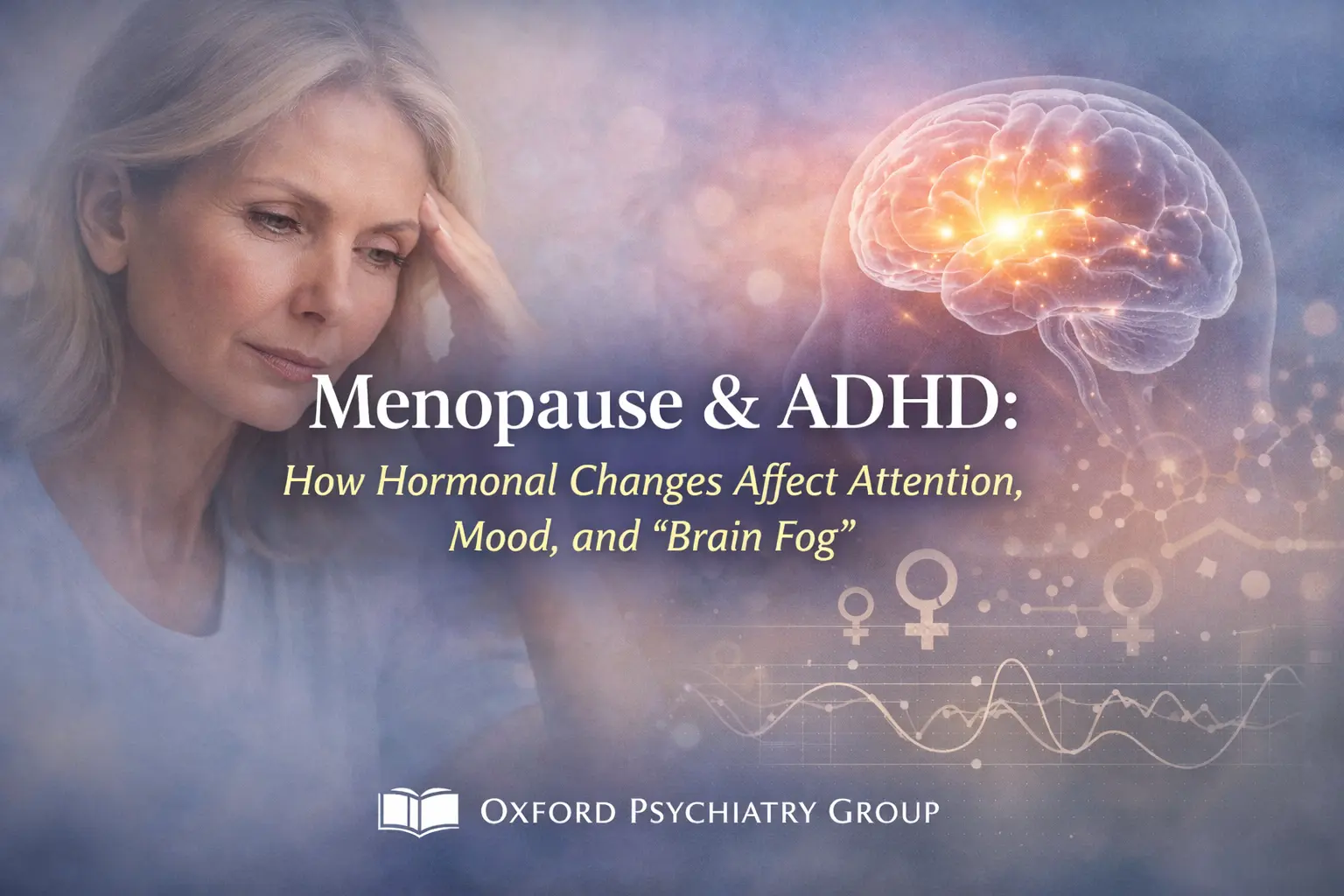
Many women describe a noticeable shift in focus, organisation, sleep and emotional regulation during perimenopause and menopause. That’s not surprising: menopause involves fluctuating, then falling, ovarian hormones (especially oestrogen), and NICE recognises that menopause can be associated with psychological and cognitive symptoms as well as physical ones.
Why does this matter for ADHD?
ADHD is a neurodevelopmental condition that can continue into adulthood, affecting attention, impulsivity, motivation and executive functioning.
Several reputable reviews highlight that hormonal transitions (including perimenopause) can interact with ADHD symptoms, and that periods of lower oestrogen may be linked to more cognitive and mood difficulties for some women.
One proposed mechanism
One proposed mechanism is that oestrogen influences brain systems involved in attention and working memory, particularly prefrontal networks, and also modulates dopamine signalling, which is central to ADHD. When oestrogen drops, some people may notice more “mental clutter”, reduced concentration, irritability, or lower stress tolerance.
Importantly, the research base is still developing: recent systematic reviews note that available studies are limited and more high-quality menopause-specific ADHD research is needed.
What to do in practice?
NICE guidance on menopause emphasises individualised assessment and evidence-based treatment options (including HRT where appropriate), while NICE guidance on ADHD covers structured assessment and management (including medication and psychological support when indicated).
If ADHD symptoms feel newly apparent or harder to manage around perimenopause, it’s worth discussing both menopause symptoms and ADHD treatment together with a qualified clinician, so care plans can be made for individuals rather than treated as groups.